
Polishing the First Draft of a Novel before Submission

Inexperienced novelists are often confused about the steps that follow after the first draft is finished. Novelists who plan to go the traditional publishing route need to revise and re-edit their work before finding an agent. In this process the output should also be free of the common mistakes made by first-time novelists. Otherwise the novel will not be selected by a discerning agent. If the self-publishing route is chosen, then review and revision is still necessary, and finding an editor to review the work is recommended.
Getting to the First Draft
Often the first draft is in a clearly unfinished state that was intended to be revised afterwards. This is because writing is a hard task, and the writer needs to write something before improving it. However, some writers do not realize the first draft is the start of a new stage in the writing process. If you are at this stage then this discussion is for you.
Become an Objective Reviewer by Taking a Time-Out
Create some space and separation from your output, so you can look at your draft objectively. Let some time pass. Ways to create some space include printing a hard copy of the novel and reading it through an e-reader after converting it to an .epub or .mobi file. The draft can also be listened to by reading it aloud or having someone else read it aloud and recording it.
Editing and Rewriting the First Draft
Consider the novel as a whole, and ask yourself whether the themes and sub-themes work. Is the novel economically written, or does the content need pruning? Keep in mind that beautiful or flowery prose can overwhelm the content.
Are the characters relatable or plausible? Is the plot riddled with holes or missing some vital parts? Did you forget to tie up loose ends? Are the descriptions just right or excessive? Is the pacing right? Consider such thematic issues.
Then review the technicalities of the writing. How are the grammar, spelling, and punctuation? Do sentences flow well? Do the paragraphs support the narrative flow? If you are unsure about the technicalities then you should read a book about the technical aspects of writing, take a writing course online or at a college, or join a writers group or workshop.
Get Some Feedback
Get feedback after reviewing and self-editing the work repeatedly until it seems complete. The process of immersion eventually obstructs objectivity. Make time for this stage. It can lead to more revisions.
The writing, review, and revision process is a learning curve. Your novel should be ready for submission after this stage is completed to your best ability.
- Published in Writing & Editing Resources
Writing an Engaging Book for Children
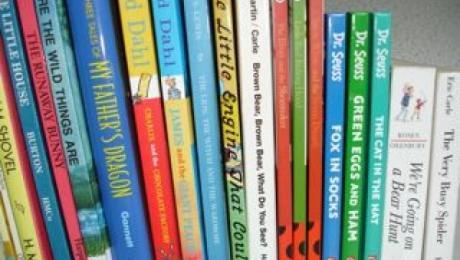
According to a Pew Internet survey of teachers, a majority thinks students are distracted easily and have shorter attention spans. However, a good children’s book will still capture their attention, even though children’s exposure to technology is a distracting factor. Kids still love to immerse themselves in stories and transport themselves in them as witnesses or protagonists. Reading takes them on adventures to captivating places in their imaginations.
As you think about your story, here are some things to keep in mind:
The Conundrum of the Target Audience
If you are considering writing for children, do not approach your work with cold calculation and write for a particular market. You need to be authentic and have a connection to your work.
However, knowing which age group you want to write for will influence how you tell your story and the words you use. Is your target audience preschoolers, kindergarteners, or elementary school students?
Is There Deeper Meaning in Your Book?
Do you want to teach a life lesson, show your readers how to do something, or are you simply a storyteller? For life lessons, you can write what you think is worth knowing about, or research topics that would be useful for your intended audience. No matter what you write about, your originality should standout. Writing what you would have loved to read as a child is one way to be an authentic children’s book author.
Capturing the Attention of Young Readers
Just because you are writing for children does not mean the quality should suffer. Nevertheless, avoiding long sentences, longwinded narrative descriptions, and sophisticated words will improve the readability of the content.
Begin with an exciting and engrossing narrative to capture interest. Engage readers with an interesting plot developed through the dialogue of realistic and relatable characters. Add humor, if it fits.
Avoid Patronizing Your Readers
An entertaining story can still challenge readers and their intellect. A story that is too simple or complex to follow will lose readers; but you can still write a creative story on subject matter your readers would not have imagined.
Get Input from Others
If you have children, nephews, or nieces, or know children in the age group you are writing for, have them read your work. Their input may be constructive and help you to improve your work.
Writing a children’s book is a rewarding experience when the work is appreciated. If your book remains a fond memory for years to come, then you have earned it by valuing your readers and working hard to earn their appreciation.
- Published in Writing & Editing Resources
Follow Submission Guidelines to Avoid Burial in the Slush Pile
Writers need to pay attention and show respect by following submission guidelines. The best way to avoid being discarded in the slush pile is to follow the submission guidelines. The slush pile is the publishing industry term for unsolicited manuscripts or query letters sent by authors, or unfamiliar agents, to the publisher.
Submission Guidelines Vary
While submission guidelines vary, most guidelines are available on the websites of the publications. However, one standard requirement is the formatting of the submitted work. Going through the pile is an arduous task, so reviewers are not in a generous mood when they encounter obviously unacceptable work.
Some publications allow works to be resubmitted; but others reject erroneous submissions without redemption. Improperly submitted work wastes your time and theirs. If you follow submission guidelines, your unsolicited work still needs to go through the slush pile.
Do Other Submissions have an Advantage?
Solicited work is usually accepted. Submissions sent by writers, or agents, with some connection to the publication bypass the pre-editor review round, known as the “reader round” in the publishing industry. If another publication has published you, or your submission was rejected but your style was appreciated, your next submission may bypass the slush pile. But, that is not an assurance of success, as most of the non-slush pile submissions are not published.
Do Submissions in the Slush Pile get Published?
The published amount of slush pile submissions varies. Do not assume you have no chance of acceptance, if you have carefully crafted your work, and selected the publication with care.
Select the Publications Carefully
Research to find out what kind of material the publications like to publish. Good writing that is a bad fit is generally not accepted. The slush pile has too many examples of submissions that do not meet the publications’ criteria.
Since there are less readers/ reviewers than the amount of submissions, they have little time to read the material. Your work will not make its way to an editor, if it fails to grab the attention of the slush pile reader in the beginning.
Be aware that going though the slush pile is a preliminary step in the writing career of most magazine/journal writers. Do not get disheartened if you experience a rejection after your submit a story, essay, or poem you to a literary publication. In the era of online submissions, literary publications just do not have the space to publish most of what they receive. If you are confident in your work, go ahead and submit your writing to another compatible journal, after making sure you follow its guidelines.
- Published in Writing & Editing Resources
Do You Know the Category of Your Fiction Novel?
Are you writing a literary, mainstream/general fiction, or genre novel? Did you think about genres when you started writing your novel, or afterwards? Some authors easily identify the category of their work. However, others find it more difficult.
Categorizing the fiction type is important for agents and publishers. It helps to position the marketing of the product and identify its target audience. If your novel does not fit a genre classification, it might be a mainstream novel.
Differences between Mainstream and Literary Works
Is your book literary fiction? The beauty of the writing style and the themes are more important in literary fiction. Harper Lee’s To Kill a Mockingbird is literary fiction. You may think literary works are highbrow; but Harper Lee’s masterpiece is engaging because it is not highbrow. It presents complex issues in a narrative style that engages readers with deceptive simplicity. Crime and Punishment by Fyodor Dostoevsky is also a work of literary fiction. It is much more than a crime novel.
Mainstream fiction focuses more on action, although it may have elements of a literary novel. The storyline hooks the reader, while the characters and plot fuel the momentum. This characteristic makes novels in this category marketable to a larger target audience. Mainstream fiction readers like to follow an exciting plot.
Literary fiction is considered a limited niche market today because fewer people spend their time reading complex, and sophisticated fiction. Readers of literary fiction like to linger over their reading material.
Identifying Genre Fiction
Genre novels have a built-in target audience that looks for books in a particular category. These novels focus on the story. Character development takes a back seat to the main plot built around the genre’s primary focus. This means in mysteries the main character’s activities are focused on solving the mystery; and in a romance, the focus is on the relationship between the two main characters.
Entertaining the reader is the main purpose of genre fiction. The linear storyline culminates with a clear resolution and satisfies the reader’s expectation. Hence, a happy ending is the culmination of the narrative arc of a romance novel’s storyline.
Mainstream fiction does not fit into a defined genre category. It is harder to market, because there is no target audience. However, it has the potential of appealing to a broader audience. The word-count requirements and style guidelines are stricter for genre novels, than they are for mainstream or literary fiction. So, it is also important to know how to classify your novel for this reason as well.
- Published in Writing & Editing Resources
Getting Your Creative Juices Flowing as A Writer
If you are an avid fiction writer, then you have probably run into the problem of writer’s block once or twice. Lack of inspiration is the most potent enemy to a writer of any kind, but especially to one who relies on original tales and stories of fiction. Still, there are a number of ways you can get your creative juices flowing again, no matter how tapped out you feel.
Writers have a tendency to become stagnant in their work. They feel that the assignment at hand must be done as soon as possible, as many face impending deadlines for their work, but the fact remains that sitting behind your desk in your office is actually counter-productive to the creative process. To get the creative juices flowing, it is always a good place to start to get your actual, physical juices flowing: your blood. Try taking a short brake and going for a half an hour walk. We do some of our best thinking when we are walking, because we are getting more oxygen to our brains than by sitting behind a desk writing or typing.
Keep in mind that being sedentary is the enemy of creativity. Another thing you could do to combat mental and physical lethargy is to change your setting. Your desk and office may be the most congenial place for you to write logistically, but it may be stifling your imagination and creative capacities. If at all possible, set up shop in your backyard, on your deck, or at a nearby park. Try writing outdoors or simply change your work scenery to gain a different perspective.
This next pointer may be the most powerful yet: tap into your dreams. Even if, in your waking life, you are finding it hard to think creatively or come up with something new, chances are your subconscious mind is not having the same problem. It can be difficult, with your schedule, to record your dreams when you wake up in the morning, but give it a try. You can start by keeping a small notebook and a pen near your bed, perhaps on your nightstand every night. Wake up 15 minutes early every morning to give yourself time to simply lie in bed and think about your dreams. Close your eyes and try to recall every detail as best you can, no matter how seemingly inconsequential. Write everything down in the notebook—everything! This is the time where you should be a free-form recounting your dreams, and you can sift through the details and what is incomprehensible later.
You may get an idea for a new story form your dreams or maybe some valuable insight into a story you are already writing, as our dreams are often cryptic messages to us about things that are going on in our waking lives.
- Published in Writing & Editing Resources
Using Figurative Language in Writing
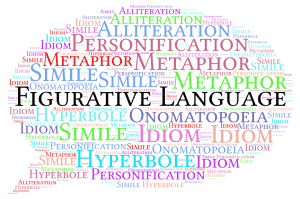
Figurative language is any literary device used by a writer to communicate something beyond the literal meaning of the words being used. That might sound complicated, but it just means that a writer can use words to paint a word picture to help their readers more accurately visualize what they are reading, or imagine the emotions and the feelings of the characters. You may find the following literary devices helpful to make your own writing more interesting and meaningful, both for your readers and for yourself.
Simile
A simile is comparing two very different things, using the words “like” or “as.” In order to be a simile, one of those two words must be used.
An example of a simile is the sentence, “He is as sweet as pie.” A person is not really like a pie, but the idea conveys to a reader that the boy in question has a sweet nature and is very amenable.
Metaphor
A metaphor is very similar to a simile in many ways. However, a metaphor compares two very different things without using the words “like” or as.”
An example of a metaphor would be the sentence, “He’s a real tiger in the courtroom.” A comparison is made between a person and a tiger; however, because the words “like” or “as” are never used, it is a metaphor rather than a simile.
Hyperbole
Hyperbole is intentional exaggeration that is made for a specific effect. For example, if a mother tells her children that she has “told them a thousand times not to climb on the curtain,” the reader understands this is not to be taken literally. Rather, the mother simply means she has told her children repeatedly. The exaggeration is clear, and its intended effect of illustrating the parent’s frustration is accomplished.
Onomatopoeia
While difficult to spell and fun to pronounce, the concept is quite simple. Onomatopoeia refers to words that make the sound they are emulating. In other words, they sound like what you are saying. An example of this is the word “creak.” As you say it, you can hear the creaking of a door or rusty hinge.
Alliteration
Alliteration repeats the initial sound in a group of words and is usually used in poetry or in prose with a specific rhythm. The effect emphasizes the sound through the repetition. An example would be, “Sally saw Simon selling seashells.”
Personification
Personification is attributing human characteristics, thoughts, and feelings to objects and animals that are not human. In some cases, they may not even be living. An example would be talking animals in stories, such as the popular Aesop Fables.
All of these types of figurative language add color and personality to your writing. The next time you read a book, take the time to notice how the author uses these techniques to draw you into the story.
- Published in Writing & Editing Resources
5 Steps to Satisfied Freelancing Clients

Being a freelance writer comes with it a set of perks. You can work from home, meaning you don’t have to spend any money on gas. You can work in your pajamas, so you don’t have to get dressed up in uncomfortable clothes. There are all sorts of benefits to working for yourself.
But what about the drawbacks? The stress of keeping a client and, in turn, bread on the table? If you work it right, you can keep clients coming back for as long as they have the budget to do so. The key is to run your freelance business like exactly what it is: a company. Here are five tips for keeping your business, and head, above water.
- Turn Down What You Cannot Take On
Never take more work than you can handle, no matter how tempting it may be. Yes, you may need to make an extra $50 to pay the electric bill this month. Perhaps a new client is offering you double what an old, stead client is. None of that matters if you can’t deliver what you promise. Be a write your clients can rely on. If you cannot accept more work, be honest with your requestor and tell them when you can get to work for them.
- Always Meet Deadlines
Emergencies happen and are understandable. However, consistently turning in work late is no different than punching a time clock five minutes past the start of your shift every day. Never fail to meet your deadlines. If an emergency does occur, be honest with your client. Most people are understanding once. Some are even understanding twice. You will rarely find someone who is willing to accept your excuses a third time.
- Charge What You Are Worth
There are people out there who pay poorly for freelance work. There are others who pay fantastically. Do a bit of research and charge your customers accordingly. You should always charge what you are worth. Never try to gouge your clients for money simply because you believe you can. If you decide you are going to charge 10 cents per word, you better be able to explain why.
- Be Consistent
Ask any freelance writer and they will tell you that they have had a day when the words didn’t flow. They made typo after type and constructed entire articles out of run-on sentences. If you find this happening to you, walk away, take a break, and return to your writing later. Your clients deserve your commitment to consistently accurate writing. If you want to experiment with your writing style or voice, discuss it with your client. Not all are open to having fun or witty articles on their site.
- Communicate
Stay in communication with your clients. If you fall ill, you are cutting back on your output, or even if you are thinking of taking a vacation, alert your clients. Advanced warning will give your clients time to find another writer. If you really want to impress them, suggest a writer that you know so they don’t have to spend time and energy hunting one down.
Do not rest on your laurels once you have found and began to write for clients. Clients who enjoy working with you will stick around. Clients who stick around put money in your pocket. It only makes sense that you would want to keep your customers coming back for more.
- Published in Writing & Editing Resources
How to Edit Your Own Work
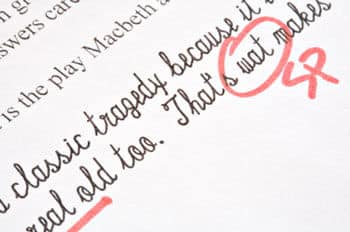
Writers might love writing, but editing is another story. Good editing can elevate a piece of writing from acceptable to outstanding. However, many writers cannot necessarily afford to pay a qualified editor and resort to self-editing instead. Follow these four tips for more effectively editing your own writing to transform it from mediocre to exceptional.
Set Your Writing Down
Give yourself some time away from your finished piece before attempting to edit. Tucking away your newly completed short story, blog post, or other work for a few days allows you to return to the piece with fresh eyes. You will then be more likely to notice mistakes or areas for improvement after taking some time off versus trying to edit immediately after you’ve finished writing.
Avoid Editing While Writing
Writers can get hung up on a word, sentence, or even paragraph at times. Rather than constantly stopping to change words and rewrite sentences in the middle of a piece you are working on, try to keep moving forward. Save the editing for the end. Editing tends to be more effective when there is a complete draft to work from.
Change the Format
Reading a finished piece of work in a different format than it was written in can make it easier to identify errors. For instance, a work that was typed in a Word document can be converted to PDF format for editing. Reading the piece as a PDF document gives it a different look. The new format can be enough to help you spot problems that might be overlooked if trying to self-edit from the original file the work was created in.
Read Backwards
An almost guaranteed method for seeing your finished work from a fresh perspective is to read it backwards. Start at the end of your piece and read to the beginning. Reading anything backwards is certainly challenging. If you can make it work, though, you will likely catch spelling errors, typos, and other mishaps that can be easily missed when reading through something you are overly familiar with.
The works of even the most accomplished writers can always benefit from a bit of editing. Such writers tend to have access to skilled editors who assist them in putting the finishing touches on their writing. Not everyone can afford the cost of a professional editor. For all the other writers in the world, the self-editing tips above can be an effective (and free!) method for polishing and perfecting one’s own writing.
- Published in Writing & Editing Resources
Character Development in Story Writing
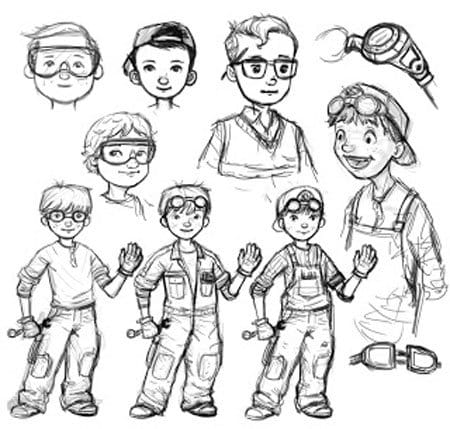
The characters in a story should be generally consistent, but to make them interesting, they must also be able to surprise readers. When developing the characters in your fiction story, apply the following tips to make them more memorable.
Drives and Desires
Characters that are driven toward satisfying some desire or achieving a particular goal tend to be intriguing to readers. There are bound to be obstacles and conflict on the journey to fulfillment, and readers enjoy having a front row seat from which to witness the turmoil likely to ensue. When a character is compelled by a driving need and will do anything to meet that need, despite challenges along the way, readers also feel compelled to tag along for the ride.
Be Vulnerable
While a character with huge ambition and an uncanny ability to easily overstep any obstacle might be impressive, he or she is not nearly as interesting as one with vulnerabilities. When a character’s vulnerable side is exposed, readers perk up. Some will identify with that weakness; perhaps even empathize with that character. Readers will likely want to know how much of an impact that vulnerability will have on the character throughout the story. They’ll also want to see if your character overcomes the challenges associated with it.
Keep Secrets
To make things interesting, let your main characters keep a few secrets. Having a big secret often means that a primary character stands to lose something big should that secret ever get out. The secret could be something from the past. Maybe it turns out that your main character, new in town and still trying to be accepted, served time for a felony years ago and will do anything to keep others from finding out. Perhaps you have a character hiding an addiction. Whatever the secret, it should provide your character with a motive for behaving a particular way.
Introduce Contradictions
Just as secrets can be interesting, so can contradictions. One-dimensional characters will leave readers bored, but introduce a contradiction in their personality and things get interesting. Suppose you have a cranky character. Try showing his compassionate side in an unexpected moment. Perhaps you’ve created an intense introvert who keeps to herself, but is later discovered to be a stripper. See? Contradictions make things memorable.
When your characters are memorable, readers will become invested in finding out what happens to them. When that happens, readers will feel compelled to follow your characters to the end of the story.
- Published in Writing & Editing Resources
Being Your Own Publisher

Becoming a published author is the dream of many writers, but one that often goes unrealized. In the world of a writer, rejection is everywhere. If the thought of securing a literary agent to represent your work leaves you feeling woozy and you fear never landing a contract with a traditional publisher, you might consider self-publishing. Years ago, publishing your own book was not a possibility, but it is now and there are several advantages to doing so.
Greater Royalties
There is the potential to earn a lot more money on each book sale with self-publishing. Traditional publishing companies typically pay authors about 15-20% of net earnings for a published title. The publisher takes a bigger cut for providing a host of services, including editing, layout and design, printing, and marketing. There are always fees for self-publishing, but authors keep more of the profits for themselves than with traditional publishing.
Complete Control
Publishing your book yourself allows you to retain complete control. As the author and publisher, you have the final say regarding every aspect of the book. You decide which edits to implement and what the design layout will look like. You select the title and book cover and you even set the price at which you want to sell your book. The marketing strategy is also yours to decide.
Instant Publication
Once an author has done his or her part writing and revising a book for a traditional publisher, it will still be several months before the final book is available for sale. Time is needed to design a cover, finalize the interior layout, and set the book for printing or digital format. Additionally, the publisher might already have several books in line to be completed before even beginning the design and layout process for your book. Self-publishing eliminates the long wait. Writers can practically publish their books as soon as they are written when they self-publish.
Guaranteed Publication
When you choose to self-publish you are guaranteed to be a published author. You can purchase an ISBN for your title so that your book can be sold in bookstores and through marketplaces like Amazon. It is even possible to publish digital books directly through Amazon and have them available for sale almost immediately. Once that happens, you are officially a published author.
For writers dreaming of seeing their books in print, in either hardcopy or digital format, self-publishing is a realistic way of achieving this. In addition to guaranteed publication, self-publishing offers several other benefits. In the case of earning greater royalties, for instance, self-publishing can even be considered advantageous over traditional publishing.
- Published in Writing & Editing Resources