Jeanette Winter Writes True Stories about Foreign Countries and Difficult Subjects to Educate Young Readers
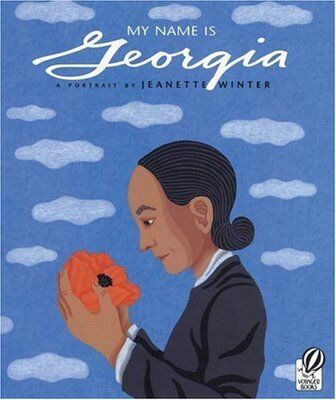
Many stories by award-winning author and illustrator, Jeanette Winter are about real-life people and events. She excels in writing about domestic and foreign subjects. Some stories like “Josefina” about Josefina Aguilar, the Mexican folk artist, introduce children to achievers in different cultures. Other books, like her biography of architect Zaha Hadid, “The World Is Not a Rectangle,” inspire children with the life story of an inspiring person.
Jeanette Winter’s stories about historic people and historic events provide young readers with information that helps them learn about history (national and foreign), become better in person, and more understanding of motivations of others. This is why she also tackles tough subjects. Parents can use her children’s books to discuss difficult subjects with their children.
Follow the Drinking Gourd—Book about Slavery
Follow the Drinking Gourd, introduces children to slavery with a story about how a folk song gave directions to slaves seeking freedom. The drinking gourd was a hollowed out gourd used as a water dipping tool.
The folksong, published in 1928 was used according to popular lore by an Underground Railroad operative who added coded instructions within it. These directions enabled fleeing slaves to head north by following the Pole Star, Polaris. The story introduces children to the importance of the Drinking Gourd song which later played a role in the Civil Rights, folk revival movements, and elementary school education.
The Librarian of Basra and Biblioburro – Books about Volunteer Public Service
“The Librarian of Basra” is the story of a woman who saved books during the Iraq War. She and her friends saved the book collection, some of which contained books that were centuries old.
“Biblioburro A True Story from Colombia,” tells the real life story of Luis Soriano who encourages reading by children in rural Colombia, with his for legged bookmobile.
A New Home and Affection for a Motherless Baby Hippo
“Mama: A True Story in Which a Baby Hippo Loses His Mama during a Tsunami, but Finds a New Home and a New Mama” shows children that losing a mother does not mean the end of having a loving mother. It also lets them know that a disaster, in this case a tsunami, can sweep victims away and cause devastating personal loss.
Jeanette Winters, opens the world for her readers, by showcasing contemporary people and activities, or by taking them back in time in un such books as “Klara’s New World,” about 19th century Swedish settlers in America, “Elsina’s Clouds” about a young South African girl who paints clouds, “Angelina’s Island” about a Jamaican immigrant in Manhattan. Short biographies about notable people reflect the general intent of the author to educate young readers.
- Published in Writing & Editing Resources
Easy Ebook Formatting
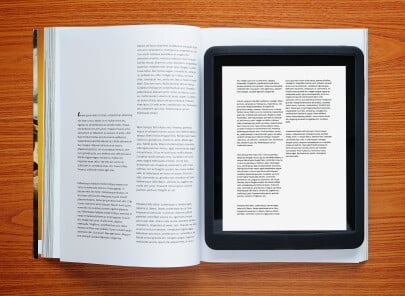
Unless authors are paying for specific services through their ebook publisher, including editing, formatting, and file conversion, they will need to take steps to ensure their book reaches readers in a clean, readable format. Bearing in mind that ePub is the most common format used with the Kindle and other reading devices and applications, these steps will save authors the headache of finding functional errors in their finished product.
Things to Avoid
Avoid letting typos through! It should go without saying, but book ratings dip when there are grammatical and spelling errors present. Remember once an ebook is converted to ePub format, corrections cannot be made. Also, remember e-reader devices have a limited number of font choices. Avoid using fancy fonts which may not translate into the finished ebook. Instead, Times New Roman and Courier are two of the better choices. If the reader wants, they can then change the font based on what their device allows.
Tabs and additional spaces are a major problem when converting material to ePub. Authors need to go through the entire document to ensure it is “clean” before sending to the e-publisher. These steps will make it easy:
- Enable “formatting marks” or “non-printing characters” in the word processor.
- Physically remove ALL tabs, double spaces, and extra paragraph breaks.
- Use the “Indent First Line” feature under the Format menu for indented paragraphs.
- Use a page break at the end of each chapter instead of multiple carriage returns.
If the book includes images, they should be resized to a maximum of 300 pixels high if they will be included with the text. If the images will be full-page, they should be resized to a maximum of 1,000 pixels in height by 700 pixels in width. Remember the accepted formats are .JPG, .PNG, and .TIF. Also, never wrap text around an image. Keep the image set in-line with text by right-clicking the photo in the document and confirming its lineup.
Remember also to never refer to page numbers in the document, as page numbers will be different on every device and every app. Instead, create a Table of Contents (TOC) at the beginning of the document and link each reference to its corresponding page by using the menus, “Insert / Reference / Index and Tables,” then “Insert Table of Contents.” Mark the text to be included (for example, Header 1 styles), and attach each reference to each TOC entry. Easy-to-follow guides for doing this are readily available on YouTube.
One last tip is to use Times New Roman if the text will include any special characters or symbols. This font is the easiest to convert for ePub, whereas if other fonts are used, they may come across as simply a blank box. Better yet, avoid using special characters if possible.
By following these simple tips, writers will ensure their ebook is a high-quality item for their readers. They will also save money over hiring formatting companies whose charges generally start around $50 for what involves only a few minutes of work.
- Published in Writing & Editing Resources