Tell a Memorable Story in Four Easy Steps

No matter what purpose your writing serves, whether fiction or prose, speech writing or business writing, the words you serve to your audience need to make a powerful impression if they are to be remembered. There are four key aspects to storytelling that should be included to motivate your audience and inspire them to pay attention. Learning to incorporate all these elements will make your writing stand out and easier to remember.
The Conflict
If you dissect any story, you will find that it is driven by a degree of conflict. Conflict refers to any challenge that needs to be overcome in order to reach a goal. A fictional example would be a character forced to decide between two things he or she wants. A business conflict may involve a competitor trying to undermine your company by underpricing their product or someone leaking proprietary information. Presenting challenges clearly sets the basis for your story.
The Transformation
When your conflict must be faced head-on to achieve a goal, be it love, wealth, or whatever else applies, this brings on the transformation. Your main character would choose love over money and find true happiness. Your company would hire an investigator to discover who leaked your company’s client list to a competitor. Transformation has many faces, including physical, emotional, and financial. It is the moment of change that gets your story where you want it to be.
Make it Authentic
To stand out and keep your audience’s attention, your writing needs to be authentic. Authenticity means you do not want your work to sound like someone else’s. Worse, you do not want it to sound generic. Even fantasy can be authentic. The idea is to create something that your audience can relate to, even if metaphorically. Once your story incorporates this aspect, you will connect with your audience and they will find relevance in your words. It should speak to their needs and emotions.
Add Some Magic
Magic can be achieved in a number of ways, and it does not have to be fantastical or unrealistic. Think of your main character as having some sort of flaw or quirk which acts as the impetus for attracting their true love. For your business, imagine that investigator your firm hires has an uncanny way of finding information no one else could through secret sources or simply intuition. He will be the wizard who magically saves the company.
All these elements weave together to create memorable stories, both real and fictitious. Conflict makes readers or listeners crave knowing what happens next. Transformation makes them say, “Yes, that’s how it should go!” Authenticity provides real-enough situations that people can relate to and apply in their active listening. Finally, magic brings it all together in an ending they may have never seen coming. Together, these key storytelling aspects will make even the most mundane stories memorable.
- Published in Writing & Editing Resources
Should You Use a Writing Critique Group?

In the process of writing, it is helpful (even vital) to have other sets of fresh eyes look at your work and give you their honest opinions. Peer and professional feedback will help you hone your writing before it is published and even before it reaches the editor, saving you precious time in going from pen to print to paycheck. Joining a writing critique group, either virtually or in person, will be your weapon against common writing mistakes that are easy to miss.
Open Critique Groups
Open critique groups have no restrictions as to genre, level of experience, or any other criteria. These are the easiest groups to work with, especially for beginners. They are found both online and locally (try searching Craigslist or Meetup.com), and due to the diversity of people involved, they can help you expand your professional network. The major drawback is you may never know what types of people will be at any given meeting, so feedback can vary in quality.
Closed Critique Groups
Closed groups most often limit the number of writers who can join and may also have restrictions on genre, experience, or other criteria. They typically involve monthly or annual fees, which can hinder some talented writers from joining. On the bright side of closed groups, the numbers are smaller so you will develop trusting relationships with those critiquing your work.
Online-Only Critique Groups
Virtual or online groups also have their pros and cons. Some helpful things about them include not having to commute to local meetings, which saves you time, and being able to set your own schedule to work within them. If the lack of personal interaction bothers you, you can find one that holds meetings via Skype or Google+ for more real-time interactions.
In addition to the groups discussed above, you may want to add a critiquing partner to your network. Ideally, this should be someone familiar with your genre and your work as a whole. Having a partner gives you the flexibility of only having to arrange meeting times and places with one person. It is recommended that you choose a partner whose ideas differ a bit from yours, as this will give you a fresh perspective on your work.
No matter what critique style you choose, remember you want to vary your audience so you achieve perspectives from as many different viewpoints as possible. This will help you see your work through your readers’ eyes, as your real-world audience will also vary widely in their ideas and interests.
- Published in Writing & Editing Resources
The Fine Line between Good and Bad Writers

Being considered by your peers as a “good” or “bad” writer can make or break your creative career. However, you can make easy adjustments to elevate your work, get noticed, and above all get better at what you do. There is always room for improvement, and anyone who tells you otherwise has given up. This leads to the first point: Good writers understand perseverance is key.
Quitters Never Win
For those who are just starting to get their feet wet in the publishing world, the first few dozen rejections can be discouraging enough to make you reconsider your passion. Where bad writers throw in the towel, good writers know that the only way to meet their goals is to keep going. Perseverance means pushing through with faith that you will improve or find the break you are waiting for.
While some writers seem to possess a natural affinity for the craft, writing must, like anything else, be practiced. Bad writers wait until inspiration hits, going long periods of time between writing sessions and then blaming things like writers’ block for their lack of production during the down times. What good writers know is that having the discipline necessary to write through the dry times makes for additional productivity and becomes a good habit. Most of all, the practice achieved in disciplined writing is vital to success.
Learning to Take Criticism
Criticism is not always a bad thing. If a peer, an editor, or your client reviews your writing and makes suggestions as to grammar, punctuation, content, or any other point of contention, take every word of advice and learn from it. Only you can decide whether or not it applies to your work, but remember, it is not generally someone’s intention to give criticism as an insult. It is there to make you better. Listen to both the internal and external voices to help you hone your writing.
Speaking of honing your writing, here is another thing good writers understand: The first draft is never the last. Bad writers will quickly knock off a piece of work, see no room for improvement, and call it a day. Good writers, on the contrary, will polish their work with one or several revisions, tuning their work with precision until it stands above the rest.
From learning to take helpful feedback with a simple, “thank you,” to realizing your work isn’t perfect but still requires your dedication, there are numerous little ways in which you as a writer can improve. Stay humble, and always be prepared to see your writing project through to completion, even if it means re-writing it twice and taking a rejection in stride from time to time.
- Published in Writing & Editing Resources
From Bucket List to Solid Goals: Moving Your Writing Forward

Whether you are an experienced writer or aspiring to compose the next Great American Novel, disorganization with your time and goals is your worst enemy. Setting goals for your writing takes little time, but it can save you hours of frustration, missed deadlines, even the dreaded “writer’s block.” When you are ready to get serious about your writing, whether for personal or business purposes, the following tips will help you put your work into perspective and meet your goals.
The first thing you should do is empty your bucket. All writers have a bucket list, no matter how minor. Maybe you want to get the novel on paper that has been rolling around in your head. Maybe you want to submit and publish a certain number of poems this year or get picked up by a certain publication. Maybe you want to set up a blog that you can maintain and gain a large following. Whatever your goals, write them all down in one place so you can begin getting them organized.
Take Small Bites
Once your major goals are listed, start looking at their specifics. This is where you will break down each goal into bite-sized pieces so they do not seem so daunting to tackle. Two things to keep in mind are to make them measurable and attainable. Outline the steps you need to take to reach each degree of success. For example, before you start your blog, you need to secure web hosting, decide how much you can or are willing to pay for it, and pick a theme and layout.
To bring your goals to fruition, they need to keep moving. Set time limits for each task, and stick to them. Your eternal “To-Do List” will transform into something you will hold yourself accountable for. Be realistic in allotting the time you need for each step toward your goal. Also, be forgiving. Sometimes things come up and you cannot meet a deadline you set. Simply re-work your schedule, and keep moving forward.
It is up to you if you want to keep your writing goals with your personal schedule or in their own notebook or calendar. You may try different ways and see which aligns best with the way you work. It will make you feel quite accomplished as you are able to check things off, regardless of how you organize. Once you plot your strategies, following them and sticking with them will become an easier habit over time. Before you know it, your once-messy bucket list will become a portfolio of your achievements.
- Published in Writing & Editing Resources
Some Memorable Life Lessons that Children Have Learned from Classic Books
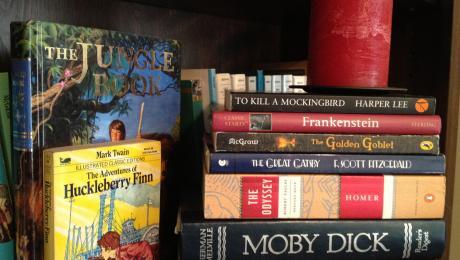
Children are not too young to appreciate insightful wisdom about the world, especially when it is packaged in an entertaining and engrossing book! Some of the most beloved children’s books have taught their readers life lessons through their engaging stories.
Lessons about friendship, adversity, individuality, differences, love, loss, and the importance of being optimistic and not giving up, are among the many life lessons illuminated by classic children’s literature. These classic books are never out of date.
Learning about Freedom and Rules
Madeleine L’Engle’s book, “A Wrinkle in Time,” is a fantasy adventure that teaches young readers about the importance of love. Meg Murry, the young heroine, must be brave to find her lost father. The insightful messages about freedom and rules in the book, first published in 1962, have not faded over time.
Respect the Environment
The message of “The Lorax” by Dr. Seuss is about respecting nature and the dangers of deforestation. The tale about Once-ler and the way he altered the landscape by removing trees is a cautionary tale about preserving the environment. Through this story, young readers are taught the importance of appreciating nature’s beauty.
Use Wit to Defeat Obstacles
In the story of “Matilda” by Roald Dahl., the child prodigy Matilda uses her wits to outsmart her foes and adversity. This book also encourages readers to appreciate books and reveals how they provided an escape mechanism for its protagonist.
Everyone Has Bad Days
First published in 1972, “Alexander and the Terrible, Horrible, No Good, Very Bad Day” by Judith Viorst was made into a movie released in 2014. The book is about one of those days when nothing goes right!
Love and Loss Are Part of Life
E.B. White’s “Charlotte’s Web” teaches children about love and loss through a story set on a farm about friendship between Charlotte the spider and Wilbur the pig and their animal friends. The importance of loyalty and friendship among different animals is a moving tale that every reader will remember.
Be Honest with Yourself
“Harriet the Spy” by Louise Fitzhugh is about the life and adventures of a precocious and intelligent 11-year-old who dresses like a boy and does not fit in with the clique. Her neighborhood adventures, interactions with classmates, and home life provide a vivid showcase that also lets readers know it is okay to be yourself, even when you do not conform, or feel like an outsider.
The Value of Optimism
Watty Piper’s “The Little Engine That Could” instructs readers about the value of optimism and determination.
Dr. Seuss, Roald Dahl, E.B White, and other authors of classic children’s literature have left behind stories that will resonate with children even today. The writers of these books understood the important role books play in development and used their creativity to enlighten children.
- Published in Writing & Editing Resources
Short Story Writers Can Build Their Audiences on Medium’s Writer-Friendly Series

Readers spend almost five million hours each month reading publications on Medium. Medium is the popular online publishing platform founded in 2012 by Biz Stone and Evan Williams. Medium’s use of an algorithmic timeline expands the audience.
Medium—the Popular Blogging Platform
Medium is a publishing platform for articles, blog posts, and stories. Writers can generate traffic and boost their readership via Series, the new platform that targets Medium’s mobile phone reading audience. Series allows writers to create stories that develop over time. Readers who subscribe to the writer’s Series will be notified about updates.
Recommendations grow the reader base. The more people who like the content by clicking on the heart icon, the more it will appear on readers’ timelines. Medium also lets bloggers know how many people viewed their articles and how many read it completely.
E-Readers and Mobile Phones Boost Serialized Fiction
Series is a concept targeting the on-the-go reader. It is a modern take on the 19th century serials that churned out short stories and boosted writers’ careers, now with mobile phone users in mind. Serials, then as now, were publications that published chunks of material episodically. Today writers can unfold their stories to be read on mobile phones by adding material over time.
In the Victorian era, serialization was a popular method of publishing stories. It made stories accessible to more people, created suspense and anticipation, and boosted readership by word-of- mouth. Dickens and his contemporaries used the series format prolifically and profitably.
The ubiquity of the serialized publication declined after the printing press made long novels affordable for the masses. However, with the creation of the internet and e-readers, this form of publishing novels is coming back in a big way. Medium is taking on JukePop, Amazon, and other online platforms that have re-established the popularity of the serial format. It is offering a bite-sized version of the serialized format.
Series Specially Designed for Mobile Phone Users
As more readers visited Medium on their phones, the platform’s creative thinkers conceived a new means for storytelling that complemented the screen constraints of mobile phones. Series offers writers a way to deliver their stories in a more immediate and dynamic format.
Readers can opt to receive notifications of new installments and save their places so they can return where they left off. Readers can provide feedback to the creator, who now can share deeper, more complex storylines with readers.
Writers can begin crafting their series on Medium’s app or online. Readers can select what they want by downloading or updating Medium’s Android or iOS app on their phones. Upon downloading or updating the app, phone users can tap the Series tab to begin reading the content.
- Published in Writing & Editing Resources
Children’s Books Can Teach Children about the Value of Diversity

As America becomes more diverse, a significant portion of the current majority population feels threatened. However, as white Americans and Europeans age, diversity is a primary factor in national growth and innovation. In fact, what is unfolding is increased competition for migrants in aging developed countries. Since a majority of characters in children’s books are white, adding diversity is a positive way to introduce children to the diversity they will experience as adults.
Children’s Books Do Not Reflect Growing Diversity of America
A study of diversity in children’s books published in 2015 revealed that more than 73 percent of the characters are white, although that is no longer the ratio in the general population in America. Non-Hispanic whites were actually 64 percent of the population according to the 2010 Census. A snapshot of the U.S. census in 2012 revealed that at the present rate the white majority will no longer be so by 2043.
Books as a Vehicle for Understanding the World
Teachers have said that a good story helps children get the message about respecting differences. From “Sneetches” by Dr. Seuss to Queen Rania, different writers have tackled this subject in our time. Writers have plenty of room to add to the growing genre of diversity books for children.
Story of Civilization is Migration
In ancient times, people and animals moved freely because of climate change or search for opportunities from one region to another. It was recently discovered that cheetahs migrated from North America across land bridges all the way to Africa. Geneticists have revealed that we are all descendants of people who left Africa in one migration.
Carl Zimmer’s article, “A Single Migration From Africa Populated the World, Studies Find,” published in the New York Times on September 21, 2016 discusses this revealing research originally published in the journal Nature.
Diversity Books for Children
The “We Need Diverse Books” movement, started in 2014, calls for more diverse children’s books to be created and made available to young readers. At school and at home, young readers can be exposed to books that help them learn about respecting differences in people. Children’s books can be windows and reflectors for their young readers.
Research about prejudice reveals that direct contact lessens stereotyping. Books introduce children to the outside world. Bringing young readers into contact with diversity via books is an entertaining and educational opportunity that children’s book and short story authors can offer their young reading public.
Writers can create stories from their imagination. However, the unfolding history of how we came to be also offers writers many opportunities to write reality-based stories for children.
- Published in Writing & Editing Resources
Word Count Separates Short Stories from Novelettes and Novellas

Aspiring writers should understand the difference between a novella, novelette, and short story. Each form has a specific structure and varies by word count. Some stories are best when they are brief; others require a bigger storyline that can still be finished in one sitting. The idea behind a novella may require more layers and plotting to do it justice.
No Standard for Differentiating Each Classification by Word Count
There is no universal standard for the different classifications. However, standards established by organizations such as the Science Fiction Writers of America provide some guidance. For the SFWA, a short story is up to 7,500 words, a novelette is more than 7,500 and up to 17,500 words, a novella is more than 17,500 and up to 40,000 words, and a novel is 40,000 words or more. Page counts vary, as formatting influences page counts.
Brevity Does Not Diminish Quality
Making a living out of selling shorter works is possible: with the advent of e-books, writers are frequently able to sell works of shorter lengths. Busy readers find it easier to read shorter works of prose. Some writers have found that selling stories individually is better than selling collections because it is easier for readers to choose what interests them.
About Short Stories
Well-written short stories are not inferior to longer works of prose. Every word counts in a short story, and for some writers that is one of the challenges of writing in this shorter form.
In the era of e-readers, short stories are becoming more popular, and their writers are being recognized with major literature awards, including the Nobel Prize for Literature and the Man Booker International Prize.
Novelettes Allow More Details than Short Stories
Novelettes help authors improve their craft. The writing style, plotting, and character development are displayed in this short form of fiction that is more structured than a short story. A novelette helps authors boost their readership by piquing the readers’ interest in a more compact form than lengthier works.
Novellas or Short Novels
Many beloved and influential books have been novellas. Famous novellas include Animal Farm, Breakfast at Tiffany’s, Of Mice and Men, and the Strange Case of Dr. Jekyll and Mr. Hyde. For publishers, shorter debut novels provide a lesser time commitment that encourages readers to get to know a new author. Longer works are subsequently less of a financial risk for publishers after an author has developed some recognition in the market.
Every story finds its ideal length when it is neither underdeveloped nor diluted. A piece of fiction should be as long as it takes to tell the whole story. Writers should not try to limit their story’s content and should allow the story to determine the word count.
However, size matters in publication. Writers should research the market and find out the specific parameters of publications, publishing houses, editors, and agents regarding word counts. Then they should submit the manuscript that shares the same structural parameters.
- Published in Writing & Editing Resources
Make a Living and Enjoy What You Do as a Children’s Book Author
Children’s literature is not a poorer form of fiction. Writing for children connects authors to the most enthusiastic readers and impacts their lives. A 20-year study has revealed that books at home increase the potential level of education of children later in life. If you are considering writing for children, you will be rewarded by your choice.
Children Read More Books
As revealed at the Nielsen Summit in 2015, 11 of the 20 top-selling books in the country between January 2014 and September 2015 were children’s books. Children’s literature is booming internationally as well. Kids are voracious readers. They read more books than adults. The publishing industry’s dominant growth sector in 2014 was the children and young adult category, according to the Association of American Publishers.
Reading Improves Children’s Brains
It is rewarding to know that your work has a positive effect on your readers. A study of 17,000 people in England, Scotland, and Wales revealed that reading for pleasure boosts intellectual progress. Those who read books frequently at age 10 and more than once a week by age 16 earned better test results. The impact of reading was found to be almost four times greater than having a parent with a post-secondary education.
Moving Fan Mail
Young fans’ sincerity and their sharing of how meaningful books have been for them makes this genre a special one for writers of children’s literature. Children’s book authors love and treasure their fan mail! To give you an idea, the chroniclebooks.com blog on February 18, 2015 presented a sweet collection of fan letters received by authors for Letter Writing Month.
Making a Living from Children’s Books
Advances vary for children’s book writers. According to the Society of Children’s Book Writers & Illustrators, the advance for a standard project ranges between $8,000 and $12,000. However, as this amount is shared with the illustrator, the writer may end up receiving between $4,000 and $6,000.
Royalties are paid after the book sales earn back the advance amount. Royalties vary but typically range between three and a half and six percent for a picture book, and otherwise between seven and 10 percent.
The payment rates are different if a writer is employed to write a book. In this case, payment is made either per word or per hour. Per-word rates range between $1 and $5, with $3 per word being the average, according to Writer’s Market. Hourly rates range between $50 and $70 per hour, with the average around $63 per hour. In addition to writing, speaking fees for children’s book writers range between $1,000 and $2,500 per day.
Books that sell well also sell in bulk because schools and libraries are ready customers. It is hard work to write something that engages children and holds their attention, but the hard work of writing pays dividends.
- Published in Writing & Editing Resources
Well Known Writers’ Quirky Habits to Boost the Creative Process

Some writers need a certain condition to boost their creative process. Many well known writers have found idiosyncratic ways to get their creative juices flowing. These literary icons have found a variety of ways to motivate themselves—from drinking copious amounts of coffee to writing in the buff—to encourage the writing genie to loosen the creative impulse.
Writing is a personal experience, and the condition that promotes the creative process is personal as well. Perhaps one of the methods described below will motivate you to establish some concentrated time working on your craft.
Getting Horizontal or Vertical
Instead of using a chair, some writers preferred standing up or lying down to write. Woody Allen, Truman Capote, George Orwell, Marcel Proust, Mark Twain, and Edith Wharton preferred to recline, while Lewis Carroll, Charles Dickens, Ernest Hemingway, Philip Roth, and Virginia Woolf preferred to stand.
Using Index Cards to Organize Scenes and Jot Down Ideas
Vladimir Nabokov used index cards, which allowed to him to reorder scenes, write on the go, or write while in bed. Today, digital tools can be used for note taking.
Select a Quota of Words
Anthony Trollope wrote 250 words every 15 minutes. Ernest Hemingway wrote at least 500 words a day. Jack London wrote 1,000 words, Thomas Wolfe wrote at least 1,800, and prolific author Stephen King has a quota of at least 2,000 adverb-less words. Norman Mailer, William Golding, and Arthur Conan Doyle each wrote 3,000 words daily.
Acting out Character Dialogues
Aaron Sorkin prefers to act out his character’s dialogues. For scriptwriters and novelists, this method might be a useful way to test the dialogue.
Writing in Your Underwear or in the Buff
John Cheever and Victor Hugo discarded their clothes. John Cheever wrote in his underwear, while Victor Hugo wrote without his clothes to discourage himself from going anywhere when a deadline was approaching.
Relying on Caffeine
Honoré de Balzac drank 50 cups of coffee a day. Voltaire was another coffee addict who drank 40 cups daily. Proust and other writers did not drink as much coffee, but many writers find coffee helps them to write.
Making Time for Exercise
Dan Brown likes to hang upside down and take exercise breaks between writing. He is not the only writer who likes to exercise before and between writing episodes.
Writing on the Go
Wallace Steven wrote while walking, Gertrude Stein and Eudora Welty wrote in the car, while Sir Walter Scott composed while on horseback. Joseph Heller and Woody Allen wrote while taking public transit.
If any of these routines are too wild for you, find your own way to create a comfortable environment that encourages your creativity. Or, maybe you have already found a personalized, quirky method that helps you work productively each day. If so, just know that you are in good company.
- Published in Writing & Editing Resources