An Interesting Life Deserves an Amazing Memoir
Have you done something in your life that few others have, or perhaps something your friends and family only wish they had? Have you had a life experience that has fundamentally changed the way you look at things or the way you act or live? If so, you should consider putting your experiences in writing by way of a memoir. Even if you consider yourself a “nobody,” something about you may inspire others, and that is a message worth sharing.
The most important thing to remember is that although you may hear the terms “memoir” and “autobiography” used interchangeably, there is a marked difference between these two types of manuscripts. An autobiography is denoted by the time frame it covers, usually a chronological account of a life from birth to present day. A memoir, on the other hand, focuses on an event or series of events in a person’s life that stands out and warrants its own full-length explanation and exploration.
Be Ready to Commit to your Project
Once you decide to start writing your memoir, commit adequate time to completing it. No polished book happens overnight, so be prepared to devote serious time to your project. Scraping together a few minutes a day will not do. Ideally, look for a minimum of two to three hours per day you can block out on your calendar so you can write with a sense of purpose. Save extra time if possible for those related memories that crop up and demand to be a part of your story.
Along with committing time to your writing, consider the space in which you write. Some people may write better on a beach with a notebook and pen while others may prefer a quiet office setting. You are your own boss when writing your memoir, so seek out the environment where you are most productive. In the end, if your writing space is uncomfortable and full of distractions, your writing will be, too.
Stepping Stones to Keep You Going
Take a look online, at a book store, or in a library at the memoirs of others (they are usually found under the autobiography section). Thumbing through a few, do any characteristics stand out to you? Maybe they are written with a sense of humor or an adventurous voice. Some come across as unapologetic, while others are inspiring. Take those aspects that grip you, and incorporate them into your personal storytelling style.
Speak with others: friends, family, even perfect strangers, to see if they are interested in your story. If they are and would like to know more, chances are you have a memoir worth writing well. Whether you have done interesting volunteer work, spent a month in another country, or experienced a traumatic event, it will make fantastic writing material which you only have to pour out onto paper. Your story is your own but you can share it with the world.
- Published in Writing & Editing Resources
Is the Current Climate Boosting the Use of Satire in the United States?
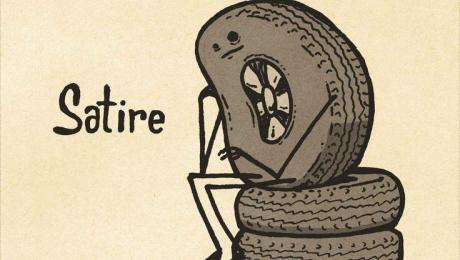
Satire uses humor and irony to criticize society, individuals, or other subjects satirists consider worthy of ridicule. In February of this year, The Independent asked, “Donald Trump has at least made American satire great again – but why didn’t Brexit do the same for Britain?”
The Trump presidency is prime material for satire in this country. The tweeter-in-chief provides plenty of sources for satirists in the media. But what about in American literature?
American Literature Has a Rich History of Satire
Satire has a long history in the U.S., as revealed in Sophia McClennen’s and Remy Maisel’s book, “Is Satire Saving Our Nation?” Cartoons lampooning the English king were popular before the country’s independence. Mark Twain and Benjamin Franklin wrote satire as critics of the culture and politics of their time. Franklin’s “A Witch Trial in Mount Holly” targeted superstition; and a theme of Mark Twain’s “The Adventures of Huckleberry Finn” was a critique of the 19th century society of his time.
Joseph Heller’s “Catch-22” is fiction that demonstrates the diverse uses of satire. Heller skillfully revealed the difference between reality and appearance. Kurt Vonnegut and Chester Himes have also demonstrated the variety in consciously written American satire.
But sometime satire is not consciously produced. For instance, Paul Beatty has also used satire to discuss race and class; but he doesn’t write satire consciously, as he revealed in an interview published in The Paris Review.
Satirical Fiction in the Trump Era
From the colonial period to the present, Americans have responded to satire. The president is a divisive figure as America moves into the minority-majority era. His polarizing politics provide ‘red meat’ for his base and a foil for satirists on both sides of the Atlantic writing fiction inspired by his actions. For example, American satirist Andrew Shaffer wrote “The Day of the Donald: Trump Trumps America,” a thriller and a parody.
British author Howard Jacobson’s “Pussy” is a satirical fable inspired by the newly elected president, while Marc Rosenthal’s and Michael Ian Black’s visual “A Child’s First Book of Trump” is a picture-book that contains humor only adults can appreciate. These satirists have taken the lead that others can follow.
Writing Satire Well Requires Skill
Satire can be humorous; but not all satire is humorous. Humor is a powerful tool in the right hands; Americans respond well to humorous satire as delivered by America’s current television satirists. Through comedy the audience is exposed to subjects deserving criticism. With growing pushback against dissent, is this the time for a new golden age of satirical fiction?
- Published in Writing & Editing Resources
Word Fillers Are Story Killers!
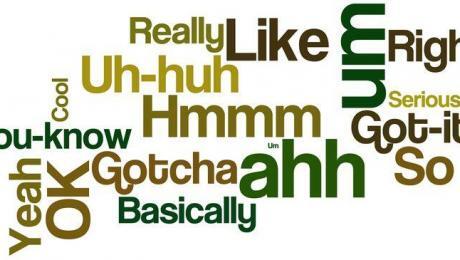
When a writer has a deadline to meet and a word count to fill, it is tempting to make sentences wordier, opting for flowery descriptions rather than powerful prose. Editors will watch for this kind of extra wording and will often delete it in bulk, leaving sentences tighter and more efficient. Filler words also tend to make written pieces boring, turning reading into drudgery when the reader would rather get straight to the point.
The following examples show words that are often overused in writing or are used to fill in space where they are otherwise not needed. Writers should look for these instances in their existing work and fix them wherever possible. They should also make a conscious effort while writing to avoid using such words and instead focus on actions and more pointed descriptors.
Examples in Concise Writing
Lose “that.” “That” is one of those words having virtually no purpose other than taking up space. Take this sentence, for example: “She promised that she would never make the same mistake twice.” Removing “that,” the sentence is just as clear: “She promised she would never make the same mistake twice.”
You “really just only” need to say what you mean. “He really just needed only one car but purchased a second,” would do better as, “He needed one car but purchased a second.” These three words are as annoying to editors and readers as “very,” which is another no-no.
“She was almost slightly drifting on what seemed like air.” Words like “almost,” “slightly,” and “seeming/seems” are boring! These give readers little direction. Saying something is “almost” something tells a reader that it may or may not be, and they will never know. “She was drifting on air,” paints an immediate and clear picture in the reader’s mind.
“Basically,” the word “absolutely” is “actually” unnecessary. If the subject of the sentence is “actually” something, using words like these become redundant. “She was positively certain she would win,” is better written as, “She was certain she would win.”
In descriptive sentences, phrases like “kind of,” “sort of,” and “a little,” convey nothing and are better left out. Readers do not want wishy-washy writing; they want the writer to speak directly and confidently. This builds trust in the writer’s work. “His speech was sort of a hit,” sounds much stronger as, “His speech was a hit!”
Finally, “very” should never be included unless it is vital: for example, in a direct quote. If a descriptor in a sentence is strong enough, this word makes the sentence weak and shows no effort on the writer’s part to convey deeper meaning. Instead of saying, “She was very mad,” remove “very” and try “irate,” “fuming,” or “infuriated.”
In short, writing concisely provides readers a clean, clear read. Readers appreciate this because it allows them to read faster and gain more insight and information, and it holds their attention better than filler words. If a writer needs help getting into this good habit, a thesaurus is a great tool to have handy while writing.
- Published in Writing & Editing Resources
Starting Your Book: First Draft Pitfalls to Avoid

As a writer, do you balk at big projects? Do you wonder where to begin or have problems focusing on the mountain of work before you? If you are beginning a book and can’t figure out where to start, or if you are mid-story and have lost focus, reading through these pitfalls and how to avoid them will motivate you to take action and finally get your book written.
Stop Over-Researching
When writing on a specific topic, it is imperative to research that topic and know what you are talking about. It is counterproductive, however, to read and pick apart every book you can find on the topic by other writers in the field. What you want is your own fresh perspective, not your writing reflecting everyone else’s. Do your research to include in your work, but know when to pull back and add your own thoughts to the topic.
Stop Brain-Storming
While free-writing is a good way for some writers to clear their heads and turn over new ideas, it is not the way to start a book. Give your work focus early on by composing a brief thesis that reflects a perspective your reader will value. This will give your work a solid introduction while keeping your writing on track.
Stop Staring at a Blank Page
Before going on a road trip, smart drivers begin with a map and a clear idea of where they are headed and how they will get there. There may be some detours or delays along the way, but they remain focused on their goal. As a writer, beginning your story without a map will lead you nowhere. Even a loose outline of what you want to cover will keep your writing trained on the task at hand and will alleviate that daunting “staring at a blank page” feeling that can block writing before it begins.
Stop Being Orderly
While it may seem logical to start writing a book at Chapter One, this is actually one of the hardest places to start. Your first chapter sets the stage for the rest of the book and must support the entire story. Likewise, your last chapter must tie the story up into a perfect bow without any loose ends. By writing from your middle chapters first, or even building your story in both directions, you will have enough material to write a solid first and last chapter, perfectly framing your story.
Stop Losing Focus
This is one of the most difficult things to accomplish when writing at length. The sock drawer needs to be organized. Trash needs to go out. A hundred other things need to be done. Despite all this clawing at your attention, your project awaits. If you intend to write a quality piece, give it the attention it deserves, even if that means scheduling time in your day for it like any other job.
Stop Editing
Editing while you write will only hinder your progress. If you are being counterproductive, you will quickly become frustrated and may abandon the project altogether. Nothing has to be perfect in your first draft (or your second, or third). Once you have at least the bare bones of your story in place, then you can worry about smoothing out the wrinkles.
Writing a book is a massive task that can be daunting and frustrating, and make even a professional writer want to throw in the proverbial towel. By kicking these common bad habits, your best writing will happen more easily than you thought possible.
- Published in Writing & Editing Resources
Graphic Novels Are Gaining in Popularity
Graphic novels (another name for comic books) have become increasingly popular with children, teen readers, and adults. The boom in the last 10 years in this category is due to the popularity of Japanese comics with young readers.
The result is that critics recognize the artistic value of graphic novels with awards, and educators are using them as teaching material. For writers interested in trying this medium, no longer considered poor literature, libraries are a good resource. In fact, librarians have noticed they are among their most circulated genre categories.
Reasons for Graphic Novels’ Popularity
Children and teen readers love graphic novels because of their easy-to-read mix of text and visual content. Graphic novels are preferable for readers of limited attention spans. With the advent of the online age and smart phones, young readers’ attention spans have shortened. Academic recognition has also widened exposure to graphic novels, as has e-book lending. Serial graphic novels make the digital format an efficient stocking medium; and tech-savvy teens respond better to digital content.
Adults with limited free time, or who are too exhausted when they have free time, are also gravitating to graphic novels and short stories. Adult readers have discovered that graphic novels possess more depth then the comic books of their youth. The illustrated stories that unfold in graphic novels have the complexity, depth, and variety of traditional novels. With less text they are easier to consume; they stimulate enjoyment by being entertaining, and they have emotional appeal, while providing the intellectual stimulation adults seek in novels.
Critically acclaimed books by Dave Gibbon (Watchmen, released in 1987), Art Spiegelman (Maus, released in 1991), and Alan Moore’s trend-setting works boosted these writers’ circulation. In this decade, traditional publishers have published other acclaimed books by authors including Alison Bechdel (Fun Home, released in 2006), Marjane Satropis (Persepolis, released in 2000), Raina Telgemier (Smile, released in 2010), and Chris Ware (Jimmy Corrigan, The Smartest Kid on Earth, released in 2000).
Why Graphic Novels with LGBT or Sexual Orientation Content Are Increasing
LGBT students are present in almost every high school. Researchers have reported that they constitute between approximately three to ten percent of the student body. School bullying and the high rate of suicide attempts by bullied LGBT pupils appears to be rising. Writers of graphic novels explore this content more because they have researched the preferences of their target audience, including educators, who are using these stories for teaching purposes.
- Published in Writing & Editing Resources
Utilize a Writing Partner to Improve Focus

Even the most seasoned writer can lose focus with their work. Whether working on a freelance article with a tight deadline or a full-length novel involving extensive research, things can and will get in the way. At times, this can make a writer feel unproductive, questioning their own abilities and undermining confidence in their work. One way to resolve such problems is to enlist the help of a writing partner.
Motivational Partners
Sometimes, all it takes is a fresh pair of eyes to find a hole in a story or a character flaw, or to provide a fresh perspective. When someone reads another writer’s work from their own perspective, they may see it as the reader might. This allows them the space from the original work to post questions readers would pose. They can then fill in the blanks, giving that written work a spark the writer would otherwise not expect. When a writer sees fresh words entangled with their own, it may refocus their attention.
Motivational partners are also fantastic at helping combat writers’ block. When a writer looks at a story long enough, the words begin to blend together. It can be difficult to figure out where a scene or even an entire plot is going. In this case, a writing partner can identify where a story dropped and either add a new twist or continue developing the writing from a seemingly dead end. Co-written stories often have a wonderful flow and a subtly changing perspective that keeps readers interested.
Teaching Partners
While engaging a writing partner is a rich source of motivation, a plethora of learning opportunities also exists. If both writing partners are willing and able, each can benefit by raising the other’s writing skills in a friendly, creative atmosphere. A writing partner can bring new styles for a stuck writer to try on their own, and can be a viable source of tips and tricks for honing one’s writing. As a worst case scenario, another writer below one’s own caliber can teach us how not to approach something.
Looking for a writing partner or even accepting that one may be needed can be a humbling experience, especially if a writer does not find the best partner right off the bat. Like anything, it is a path of trial and error. When an author is unafraid to step outside their comfort zone, they will find new inspiration in often unlikely places.
- Published in Writing & Editing Resources
Great Tech Habits for Writers and Editors

Technology is absolutely liberating in the way that it brings writers and editors together in every form of project. Not only does it offer support in major ways like easier organization and faster communication, it also allows us to live in the present with instant access to information on everything from quick technical style questions to in-depth research on any subject. It is, however, easy to get distracted and pulled into bad tech habits that are counterproductive to success.
Adopting the following habits is nearly guaranteed to change your work life for the better. The small efforts that you will expend in finding the right methods and software for yourself will pay off with more free time and much less frustration in the end.
Back Up Your Backups
It happens: your computer crashes while you are working on a new article or are up to your ears in novel research. One day, you may try to open a file only to receive an error message that it has been corrupted. For documents, the easiest way to back up your work is with a free cloud service like Google Drive, Windows SkyDrive, or Microsoft’s Dropbox. Using more than one service is recommended as services can disappear without warning. Also, regularly back up your information to a standalone drive just in case.
Always Be Current
While most software is programmed to update itself regularly, a quick check for updates once a week can’t hurt. For foolproof updates, go into your program settings and select “Auto-Update” wherever possible. This includes Word, Windows, anti-virus software, and anything else you use that is vital to your work. If you are less than tech savvy, a free program called “Update Checker” will do the work for you. By keeping your programs current, you stay safe from current threats and head off new ones.
Get Organized and Stay Organized
Organization is one of the biggest issues most writers and editors face. When work or life gets busy, it is easy to toss something (including a manuscript) to the side and forget where we put it. Using software options like cloud syncing will allow you to access your work anywhere and acts as a bonus backup tool. Keeping a database or spreadsheet of contact information and submissions will ensure all your information is in one place when you need it. Also, check out apps like Wunderlist for your to-do needs.
Free Your Work
Rather than pay exorbitant amounts for fancy software (unless you truly require it), look at the free options available online and through app stores. Word processing programs like Open Office and LibreOffice offer full software suites to help your work stand out as professional. They are loaded with all the features you need and some you didn’t know you did. A world of free organizational and security software is also available. Read software reviews to determine which will work best for your unique needs.
Portable Procrastination and Other Follies
Cultivating good habits means you actually have to get started on them. They will not become habits unless you put them in place and continue to nurture them, so it is important to start right now if you are serious about making changes that will make your writing life easier. With these four vital habits in place, bad habits get replaced, panic over lost work or lost contact information disappears, and suddenly work is more enjoyable than it’s been before.
- Published in Writing & Editing Resources
Using Trademarked Names Generically
Read the following sentence and ask yourself what’s wrong with it:
I began my fitness regimen by googling “low-impact workouts.”
Your attention should be drawn to the term “googling,” as it is being used as a verb in lieu of “searching.” While this type of language may be commonplace among millions who use Google every day, not everyone agrees with or approves of such usage. Primarily, the folks who have a problem with it are Google employees, especially their legal staff. Using trademarked names like Google as a verb, in the name-owners’ eyes, lessens the impact of the name itself as a known brand and can be a copyright issue.
Other Issues to Consider
Product and service names are trademarked to distinguish one company’s brand from others. When a brand takes off, the name can often become a household word. Over time, the word becomes more generic as it is used to refer to other things not related to the original brand. Consider terms like Bubble Wrap (trademarked in 1983 by Sealed Air Corporation) and Crock Pot (trademarked in 1972 by Sunbeam Products, Inc.
Used in everyday writing and conversation, terms like these and many others are typically not capitalized and are used to refer to any brand of the product they resemble. To be politically correct, Bubble Wrap should be called simply packing material or inflated packaging. A Crock Pot, if it is not an actual Crock Pot made by Sunbeam, should be referred to as a slow cooker.
Other words, like zipper and aspirin, were once trademarked but lost the status and can now be used generically without offending anyone or infringing on copyright. Court rulings have also removed trademark protection from these once-brand names:
- Thermos
- Trampoline
- Cellophane
- Dumpster
- Yo-Yo
Whether your weight yo-yos around the holidays or you like to dumpster-dive for trashed treasures, you can write confidently with a little research into what is still trademarked and what is not. The most-used style guides, AP and Chicago, are constantly updating as branded words fall out of trademark protection.
What the Style Guides Say
Back to using Google as a verb, while the company forbids it in a business sense, it is not legally binding in common talk or casual writing. Merriam-Webster includes both lower-case and upper-case entries and notes the term is “often capitalized.” The Chicago Manual of Style, 16th Edition, says the lawyers want it capitalized then goes on to tell us to ignore that if we want. AP presents Google, Googled, and Googling all capitalized. Unless referring to the actual company, it is safer to use generic terms.
- Published in Writing & Editing Resources
Why Some Writers Prefer Fictional, or Disguised Real Settings, and Others Don’t

Character, plot, and place are intertwined elements good writers use artfully. Sometimes the place is fictional (for example, Kent Haruf’s Holt, Colorado), or real (Naples, the backdrop of a quartet of Elena Ferrante’s novels), or disguised (Oxford disguised as Christminster by Thomas Hardy).
The Importance of the Setting
The setting imbues the story with the environment’s mood. It layers the tale with meaning about the passage of time, stages of life, constraints felt by the character, and/or as a source motivating the characters’ actions.
Undisguised Real Locations
Stories set in a familiar place help the tale appear more real for the readers. The reader becomes absorbed in a fictional story that seems real because it is set in identifiable locations. These locations change over time and are not boringly static backdrops of the unfolding plot.
Elena Ferrante, who chooses to remain anonymous, picked gritty Naples for her stories of the enduring friendship of two girls who grew up in Rione Luzzatti, a poor neighborhood slum of Naples. Naples has a certain reputation because it is home to the autonomous local mafia clans, collectively known as the Camorra.
Ferrante’s quartet of Neapolitan novels have other real settings that the characters visit (Milan, and the island of Ischia), stay in (Pisa), and live in (Florence and Turin) as they mature.
Negative, factually incorrect descriptions are vulnerable to litigation. Writers can protect themselves by including disclaimers that their creation is a work of fiction, and any real locations, organizations, and businesses described in it are fictionalized depictions by the author.
Disguised Real Locations
Real locations set in a region where the fictional town is located add touches of authenticity that encourage readers to identify with the characters in the story. Readers who recognize the real place disguised by the author develop an intimacy with the unfolding tale. Also, anonymity wards off litigation.
The Freedom of Fictional Locations
Unrecognizable places can be anywhere, but world-building requires work. Fictional locations can be as varied as J.K. Rowling’s Hogwarts and Kent Haruf’s fictional Holt, Colorado. One is more realistic than the other, but Rowling’s fiction is fantasy and Haruf’s is more realistic.
Haruf’s fictional town of Holt seems to capture life in the plains of eastern Colorado, where the author grew up. Holt, Colorado functions like Thomas Hardy’s Wessex – an imaginary place based on a real region that the writers were familiar with. However, Haruf claimed his stories could be anyplace. His characters’ experiences were not limited to a particular location or region.
There’s no superior choice of setting. Whether the location is identifiable, disguised, or fictional, the creative details depicted in each context draw the reader further into the world created by the writer.
- Published in Uncategorized
Why Writers Use Small Town Settings So Often

For writers who grew up or lived in small towns, writing about them comes easily because that life is so familiar to them. Unlike large cities with many service providers, small towns demand more of local residents, who need to become handy at doing things because the service is either not nearby or not easily available. Small towns also are fascinating settings for other reasons.
Readers Can Picture the Setting
A ready-made setting springs up in readers’ minds when a small town is depicted as the background of the story. Their imaginations can work overtime with a few hints to fuel the pictures they have created in their minds.
Appear Quiet, Slow Paced, and Intimate
The pace of small towns does not appear to be stressed and busy like “big city” life, although work life is often hard and demanding. Local folk appear more relaxed, with time on their hands to do quirky things that writers can use to engage their readers.
Small towns have less anonymity. They can be more personal. The environment does not favor privacy because people gossip and are curious about what other townspeople are doing.
Small Town Values Make for Good Drama/Conflicts/Contradictions
Appearances can be deceptive. Under the surface of pleasant small-town life can be a bubbling cauldron of passions, enmities, feuds, and even small animosities. Residents may have larger-than-life emotions: generosity, pettiness, jealousy, vengefulness, bitterness, or some other type of meanness as they appear to have more freedom to be themselves and engage more personally with others.
Towns can also have dull-witted, slow-to-respond characters that appear to reflect the ambience. Small-town moral, ethical, and cultural standards provide a good foil for character development and influences.
Good Backdrop for Subterfuge and Secrets
Lack of privacy offers writers opportunity to imagine characters harboring secrets that add spice to stories. In the less private environment of small-town settings, there are major potential repercussions if secrets become public knowledge and get passed around so “everyone” knows what is going on.
Less Receptive to Change, “Modern,” or Different Folk
The slow pace of small-town life lends itself to acceptance of the status quo and resistance to change. Newcomers are welcome, so long as they are not subversive. Blending in is expected because the confined setting is not conducive to ruffled feathers.
Small Towns Can be Insular, Claustrophobic, Limit Potential
The flip side of neighborliness is the constraining insularity. Career potential and education opportunities are limited. There is a reason why ambitious youth leave their hometowns. For writers, that environment offers potential material for intergenerational and/or interpersonal conflicts.
The small town can be a creation of the writer; for example, Kent Haruf’s Holt, Colorado is a fictional derivative of three towns. Sherwood Anderson’s “Winesburg, Ohio” is a reminder that small-town life has been inspiring American writers for a long time.
- Published in Writing & Editing Resources